
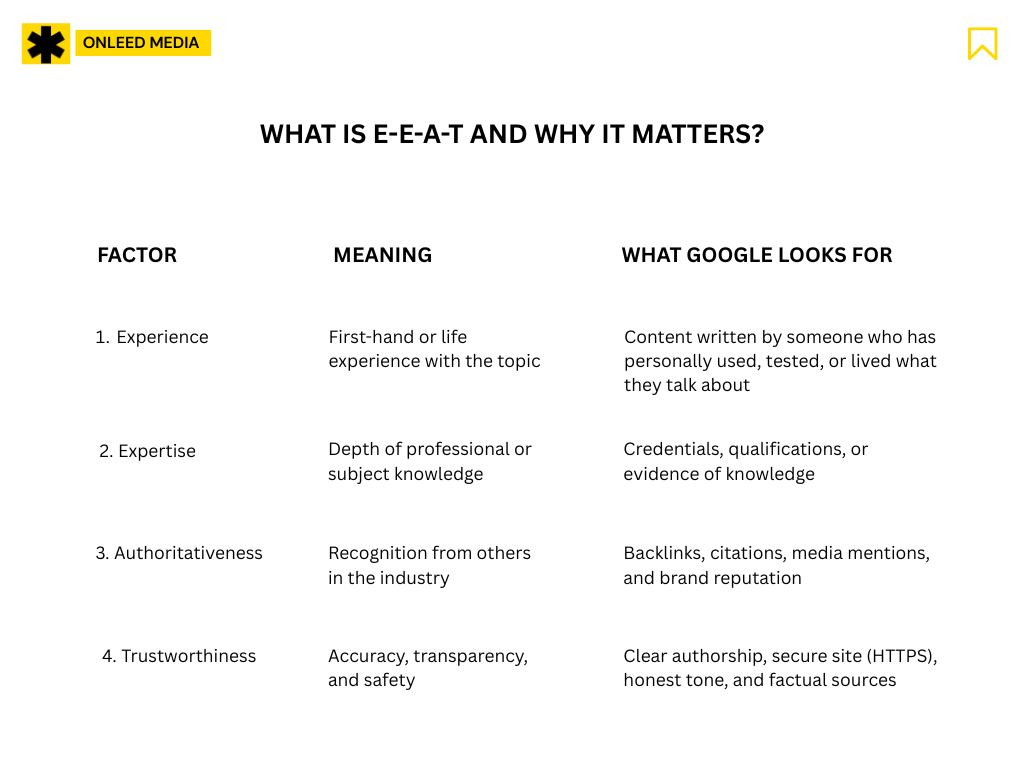
In 2026, Google’s search algorithm is doubling down on one powerful concept — E-E-A-T: Experience, Expertise, Authoritativeness, and Trustworthiness.
This framework isn’t new, but the way Google uses it in ranking is becoming far more advanced. With AI-generated content flooding the web, Google wants to ensure that only genuine, expert-driven, experience-based information surfaces.
Whether you run a blog, manage brand content, or lead an SEO agency, understanding and applying E-E-A-T is now the difference between rising and vanishing in search results.
AI Content = Higher Scrutiny.
With tools producing millions of low-effort articles, Google’s 2026 algorithms are trained to detect experience gaps.
Example: “Best fitness apps 2026” written by someone who never used any apps will rank lower than a creator who shows screenshots, reviews, and real results.
2. Experience Is the New Differentiator.
Google’s documentation (Search Quality Rater Guidelines, 2025 revision) now treats first-hand experience as a top-tier trust factor.
User-generated examples, case studies, testimonials, and photos add experience signals.
3. Author Pages & Transparency.
By 2026, expect Google to weigh author bios, credentials, and linked social verification more heavily. Anonymous content will continue to lose visibility.
4. Reputation Across the Web Matters.
Google now pulls signals from multiple sources mentions, reviews, external references to assess authority. Brand sentiment analysis is part of this.
5. Topical Depth Beats Keyword Density.
Pages covering topics comprehensively, linking internally, and offering helpful media (videos, guides) consistently outperform keyword-stuffed posts
Add first-hand images, videos, or product screenshots.
Share personal insights or customer stories.
Include “How we tested,” “Our results,” or “What we learned” sections.
List credentials or years of experience for authors.
Link to reputable sources and supporting research.
Keep articles updated; stale information weakens expertise signals.
Secure backlinks from trusted domains (industry news, academic, .gov, .edu).
Guest-author on authoritative sites or collaborate on research.
Maintain consistent branding and publish thought-leadership pieces.
Use HTTPS and display clear contact details.
Be transparent about sponsorships or affiliate links.
Avoid clickbait; deliver what headlines promise.
Encourage genuine user reviews and respond professionally.