
As a digital marketing agency with experience in PPC, we’ve seen Google Ads evolve from simple keyword-based text ads into today’s AI-powered ecosystem. The truth is, the old “one-size-fits-all” campaigns don’t work anymore. Instead, there are three campaign types in 2025 that consistently deliver results across industries:
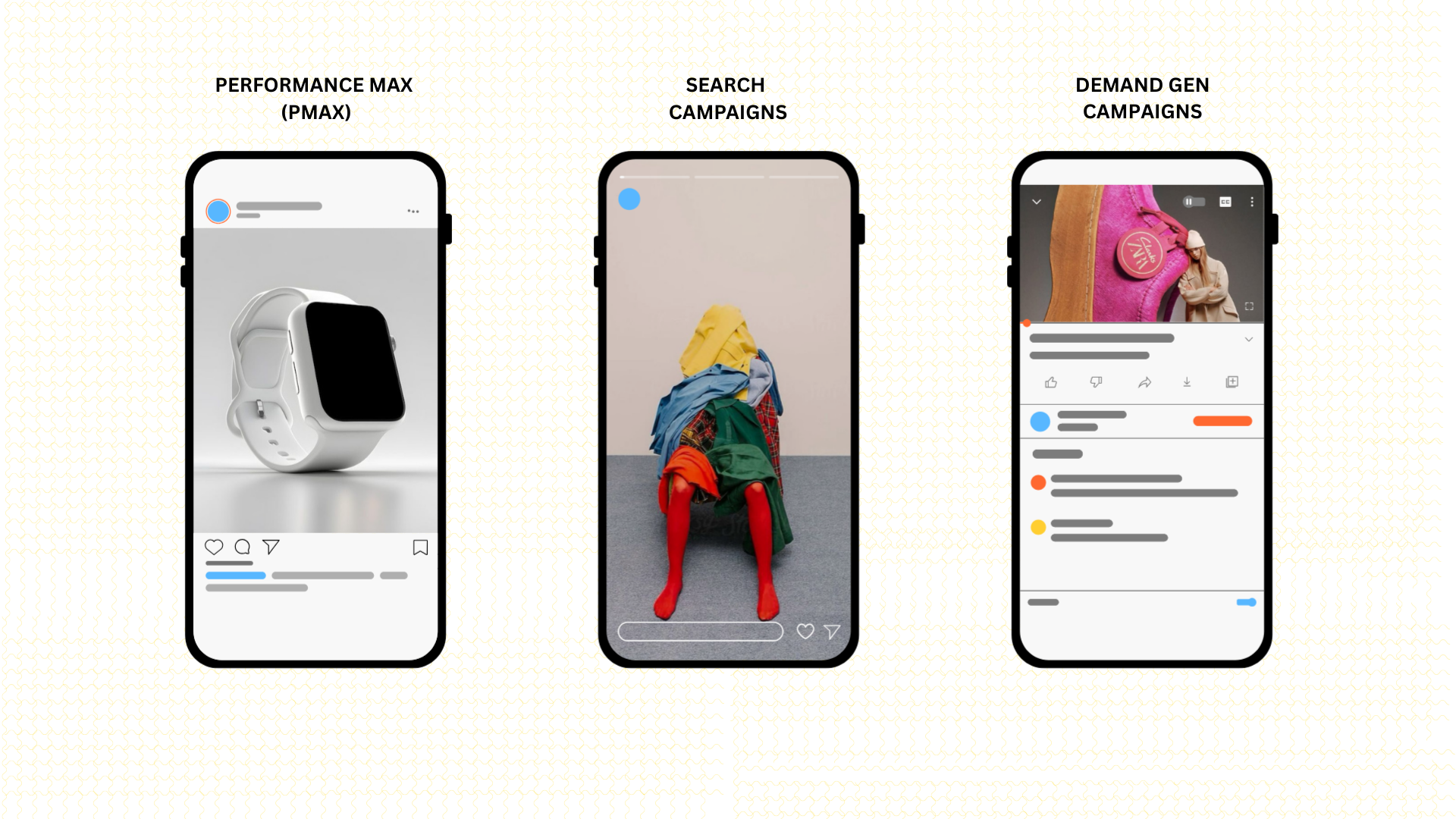
In this guide, we will break them down in simple, beginner-friendly language, show you why they work in 2025 backed by actual updates and data, and give you examples of how a small business can set them up.
Performance Max is Google’s all-in-one AI-powered campaign that shows your ads across Search, YouTube, Display, Discover, Gmail, and Maps. Instead of splitting budget across multiple campaigns, PMax finds the cheapest conversions across all channels.
Google introduced channel-level reporting, search term insights, and asset group reporting this year. This makes PMax more transparent than ever.
At Google Marketing Live 2025, it was revealed that advertisers using improved PMax setups saw an average 10% lift in conversions and conversion value.
Click-through rates (CTRs) across industries also nudged up in early 2025, showing that properly optimized creatives perform better than AI-generated placeholders.
Start simple: One campaign per goal (Sales, Leads, Store Visits).
Feed it clean data: Use GA4 + enhanced conversions. If your conversions don’t have a value, assign one (e.g., a lead = ₹500).
Control your brand spend: Use brand exclusions to prevent PMax from eating budget on searches for your own name. Run a separate brand-only campaign instead.
Creative matters: Upload your own product photos, testimonials, and 15-second videos. Don’t rely only on auto-generated assets.
Check reporting: Look at “search themes” and “asset group performance” weekly. Double down on what converts, cut what doesn’t.
A watch brand can run PMax with product feed + lifestyle images. Google will push ads on YouTube Shorts, Shopping, and Gmail Promotions automatically, targeting people interested in watches, fashion, or gifting.
Search campaigns are still the backbone of Google Ads in 2025. But they’ve changed: Google now encourages advertisers to use Broad Match with Smart Bidding instead of exact match only.
Broad Match helps you capture all relevant searches, even ones you didn’t think of.
Smart Bidding (like Maximize Conversions or Target CPA) uses AI to bid based on signals like device, time, audience, and intent something no human could manually optimize.
Google has made A/B testing easier inside Search campaigns, so you can test ad strategies faster.
Campaign Objective: Choose Leads or Sales, not just “Traffic.”
Keywords: Start with 10–15 Broad Match keywords (e.g., “best accounting software,” “dentist near me”) and build a negative keyword list as you go.
Ad copy: Use Responsive Search Ads with at least 10–12 headlines. Mix benefit-driven lines (“Save 20% on Premium Watches”) with trust signals (“Free 2-Year Warranty”).
Bidding: Start with Maximize Conversions. Once you get 30+ conversions, switch to Target CPA/ROAS.
A local dentist can run a Search campaign targeting “braces cost in [city]” or “tooth implant near me.” The campaign automatically adjusts bids to show ads at the best times (e.g., evenings, mobile searches).
Demand Gen campaigns replaced Discovery Ads and Video Action Campaigns. These ads run on YouTube, Discover, and Gmail visually rich placements that attract attention at low cost.
In April 2025, Google stopped allowing new Video Action Campaigns, and by July, all existing VACs were auto-upgraded to Demand Gen.
Demand Gen is designed for scroll-native ads (short YouTube videos, image carousels, Gmail promotions) that blend into user feeds.
Advertisers can now control channel placements better, making it easier to optimize budgets.
Use lookalike audiences built from your past converters or email list.
Upload short-form video ads (6–15s) plus square image carousels.
Optimize for Conversions, not clicks—let Google’s AI find people most likely to act.
Combine with retargeting: People who watched your YouTube ad can be pushed into PMax or Search campaigns.
A B2B SaaS startup can run a Demand Gen campaign with a 30-second demo video → retarget with PMax for free trial signups → close with Search Ads when users Google “[competitor] alternative.”
The real magic in 2025 is not choosing one campaign, but combining them:
Demand Gen fills your funnel with affordable video + carousel ads.
Performance Max follows those warmed audiences across all Google channels.
Search Ads capture the high-intent buyers who are ready to convert.
Marketing is always changing, and we’re here to make sense of it.
From new updates to honest answers, we break it down so you don’t have to.